 12 Aug 2011

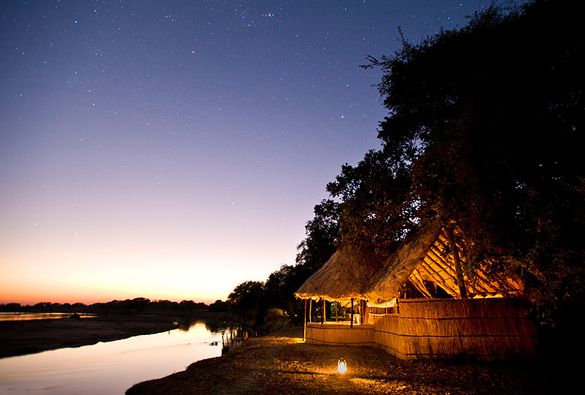
We’re rather fussy when it comes to the terminology used in describing what we do in the safari tourist industry. We definitely do not consider ourselves hoteliers, operating hotels or resorts. We are safari operators running safari camps in far flung, remote locations in the wilds of Africa, which produces very different challenges to that of running a hotel in an urban environment.
Most of us find ourselves pursuing careers in the service industry through a passion for wildlife and the wilderness, whereas hoteliers generally have a far better idea of what they are letting themselves in for and train themselves accordingly. We, on the other hand, generally have no formal training in hotel management and have to learn the hard way (with many of us falling by the wayside).
Sooner or later we learn that the business is essentially the same and the bottom line is occupancies. “Bums in beds” are key to a successful business and input costs have to be very carefully controlled. Our training is gained through experience. Rural villagers who have mostly not even completed secondary school have to be trained as waiters, chefs, plumbers, mechanics etc. We have to provide comfortable accommodations, excellent food and drink and good facilities for our guests. But this is not enough….we can pamper our guests all we like but if they leave after 3 or 4 days having not seen a leopard posing perfectly in the fork of a tree or lions killing a buffalo (as they do on Discovery Channel every night) they are liable to leave dissatisfied. Of course nobody is aware that the Discovery Channel programme took several months to film.
Fortunately the Luangwa Valley, where I work, is so rich in wildlife that it is rare indeed for guests to leave unimpressed but in order to position oneself in such an area presents a host of new challenges. Invariably, as in my case, such destinations are so wild and remote that access is limited to the dry season only which leads to a 6 month window of opportunity for business. Ski resorts are somewhat similar but at least such resorts can often be used as summer holiday getaways. Our camps are totally inaccessible by road during the wet months and at the start of each dry season the state of these ‘roads’ is so bad that they effectively have to be rebuilt (usually by us as the Government agency responsible finds itself short of funds almost every year!). Only specialist 4WD trucks can negotiate these roads in order to transport necessary supplies, including fuel. We are off the electricity grid so have to generate our own power; boreholes have to be drilled to provide water; there are no garages anywhere nearby so we build our own fully equipped workshops; we have to provide our own salads and vegetables from gardens that have to be protected against marauding elephants (with the help of 9,000 volts).
There are no sophisticated medical facilities in this area. Fortunately my wife has a medical background and effectively became the local doctor, tending not only to our guests’ minor ailments but also to hundreds of local villagers. We finally built a rural clinic and installed a Government Medical Officer to care for the villagers.
In short we have to be self sufficient and innovative. Not only do we have to learn about hotel management but we have to call upon various other skills: engineering, medical, plumbing, gardening, wildlife conservation to name a few.
Fairly unique problems crop up from time to time. One night a large bull elephant was feeding on the fallen fruit of a winter thorn tree in camp. Some of the delectable pods had fallen into the open air bathroom of one of the chalets. Once the elephant had scooped up all the easily accessible pods he removed the wash hand basin in order to reach a few that had fallen into the corner. He was then able to wash down the pods with water spouting from the 2 remaining water pipes…..until scalding hot water came through the one and he ran off squealing into the night.
Logistical difficulties have become less severe with time – at least most necessary supplies are available in this country now. I recall a time when beer (amongst many other commodities) was in extremely short supply. Despite this the breweries would only sell a minimum of one pallet of beer (44 crates) and this would only be forthcoming in exchange for a full complement of empties. Each new bottle had to be individually checked for large floaters and there would always be at least a dozen empty bottles. To cap it off nothing would be supplied at all unless the Branch Manager received a suitable present in exchange for generously allowing us to buy the beer!
No doubt some formal training as an hotelier would be of enormous benefit to anybody starting out in this industry as it would arm them to deal with the implementation of systems required to run an efficient business. In the 80’s we were all in it for the fun and love of the bush - turning a profit was of secondary importance. The world has changed of course and in modern times there is no room for inefficiently run businesses; we have had to learn our professionalism through experience and despite all the adversity none of us would trade the remoteness of the African bush for a cosy downtown hotel.
John Coppinger
Owner of Remote Africa Safari’s
South Luangwa, Zambia
www.remoteafrica.com
E: info@classicretreats.com
T: +44 131 476 6822
-Ends-
Jo Haw
Tel: 0131 4766822
Email: Joanne@classicretreats.com