05 Aug 2026
Tags: Bury St Edmunds witch trials, Witchcraft in East Anglia, England's witch trials, Moyse's Hall museum witchcraft exhibition, Halloween

New witchcraft and witch trials exhibition opening for Halloween in
Bury St Edmunds plus links with Salem Witch Museum
Bury St Edmunds town centre Moyse's Hall Museum will be opening a new witchcraft exhibition on Halloween, 31st October focusing on the Witch Trials of Bury St Edmunds and East Anglia and witchcraft practices.
The history of Bury St Edmunds in Suffolk took a very dark turn between 1599 and 1694 when the Great Witch Craze swept through Europe and the European colonies in America leading to England's largest witch trial in Bury St Edmunds in 1645.
The trials directly influenced the infamous Salem witch trials in Massachusetts which took place between February 1692 and May 1693.
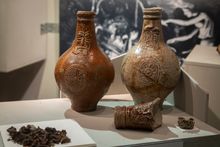
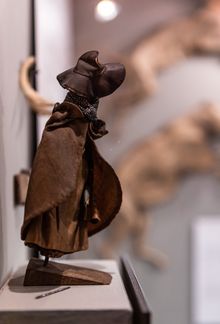
The new exhibition will share the executed victims' stories and exploring the reasons why the murderous witch trials may have occurred. It will also include the practices which witches were believed to have carried out.
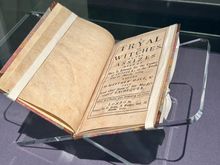
It will feature a poignant long-term display of the victims' names ensuring they will not be lost in history. Also on show will be the historic 'Tryal of Witches' booklet from 1682 detailing the trial of two widows and information about the Salem trials and Witch Museum.
Partnership with Salem Witch Museum, Massachusetts
'Before Salem there was Bury St Edmunds'
Moyse's Hall Museum has forged links with the Salem Witch Museum in Massachusetts as part of a project to explore the shared history of the infamous witch trials. A series of lecture swaps is planned with the Salem museum giving lectures to the Bury St Edmunds Museum audience and vice versa - creating a mutual exchange of knowledge and culture. The first will take place on 7th October and the second on 18th November at 7pm GMT. There will also be a town pumpkin carving competition which will be judged by Salem Witch Museum.
This transatlantic partnership between the two museums is part of a wider project seeking to highlight Bury St Edmunds darker history including the witch trials.
England's largest witch trial 1645
Bury St Edmunds in Suffolk holds the unfortunate distinction of having hosted the largest witch trial in English history. On 26 August 1645 around 140 people from all over the county were brought by cart to the town for trial.
Up until this date, the largest British witch trial had been the Pendle Witch Child case in Lancaster in 1612 where a young child had accused her whole family of witchcraft and caused the deaths of 11 people.
The 1645 trial was instigated by Matthew Hopkins, the self-proclaimed Witchfinder General, who with John Stearne interrogated hundreds of people, and conducted at a special court under John Godbolt. News of the trial was eagerly awaited with eye-witness accounts and copies of the Suffolk confessions shared.
On the first day the Grand Jury in Bury St Edmunds heard 90 cases, spending only a few minutes on each. Sixty cases were approved for trial and by the end of the day half had been tried, resulting in 16 women and two men being sentenced to death. They were hanged the following day on 27 August 1645.
The trial was interrupted by the advance of Royalist troops from the north, leaving about 120 people still awaiting trial.
Trial of two widows from Lowestoft for witchcraft 1662
The tragic story of Amy Denny and Rose Cullender, two elderly widows from Lowestoft accused, tried, and executed for witchcraft in Bury St Edmunds in 1662, is preserved in a historic booklet entitled 'A Tryal of Witches' published in 1682, 20 years after their execution. The unknown author gives a detailed account of their trial.
The case is significant because it remains one of the most detailed records of an English witch trial and allowed 'spectral evidence' from single uncorroborated witnesses setting a legal precedent that directly influenced the Salem witch trials in Massachusetts which took place between February 1692 and May 1693.
'A Tryal of Witches' was consulted by Salem magistrates when determining what types of evidence were admissible. The trial directly influenced the legal thinking of Cotton Mather, a prominent minister during that time.
A reprinted 1716 edition can now be seen at Moyse's Hall Museum in Bury St Edmunds.
Historian and Author Ivan Bunn, who wrote 'A Trial of Witches - a Seventeenth-century Witchcraft Prosecution' with US criminologist Professor Gilbert Geis (published 1997), notes that the Salem trials might not have taken place had it not been for the Bury St Edmunds trial.
More information about Bury St Edmunds darker history, other things to see and do and where to stay can be found on www.burystedmundsandbeyond.co.uk.
- Ends -
For press enquiries, images or to discuss a possible review visit contact:
Pat Edgar, PR Matters
Tel: 01494 764408 / 07836 786043
Email: PRMatters@talktalk.net
August 2026
Notes for Editors:
About Bury St Edmunds and Beyond
Bury St Edmunds and Beyond, founded in 2017, is the official tourism brand for Bury St Edmunds and the surrounding area and part of Our Bury St Edmunds Business Improvement District.
It promotes the town through marketing campaigns, fresh and engaging content, social media, PR and works closely with other nearby destinations to drive visitors to its website www.burystedmundsandbeyond.co.uk to showcase all that Bury St Edmunds and surrounding area has to offer. It offers a route to market for tourism businesses in the area (our members) and aims to increase overnight stays.