 02 Oct 2004

Guam is situated in the Western Pacific, 900 miles north of the equator at 13 degrees north latitude and 144 degrees east longitude. As the gateway to Micronesia, Guam is the largest island in the region. Guam�s history extends as far back as 3000 B.C., when the first Chamorros arrived from the Malay Peninsula. These ancient people lived alone on the island until Ferdinand Magellan landed there in 1521. For more than 300 years, the Chamorro way of life was influenced by the Spanish presence.
The 1800s brought additional European explorers to the Western Pacific island, again introducing the natives to new cultures. Guam has also faced several cultural transitions since 1898, when the island became a U.S. territory after the Spanish-American War.
Today, the combined influences of this rich cultural history have helped to make Guam an appealing travel destination.
ANCIENT CHAMORROS The island�s indigenous people were ancient seafarers of Malay-Polynesian descent. The Chamorros were among the first to migrate from Southeast Asia to the Pacific islands. While scholars cannot document the events that triggered the migration, they suspect it was due to the Mongolian mass movement throughout Asia. Chamorros, fearing loss of land and culture, canoed east to find a new homeland.
Chamorros lived in clans and kept strong ties within their families. Chamorro society was matriarchal. The women had control over family affairs and were responsible for the raising of children, the disposal of property and the allocation of inheritances.
The agriculture-based society had no form of central government. Each of the island�s estimated 180 villages was controlled through a district system, in which chieftains and important men and women formed councils to identify and solve problems.
Ancient Chamorros had no organized religion, church, temple or creed. They did, however, give credence to gods who created humanity and to spirits of the dead.
The Chamorros� most interesting relics are latte stones, monuments as high as 13 feet, that once supported the homes of the upper class. The pillar base for these Chamorro homes was used as early as 500 A.D. Commodore George Anson, an English privateer, described the latte ruins in 1742:
�There are, in all parts of the island, a great number of ruins of a very particular kind; they usually consist of two rows of square pyramidal pillars, each pillar being about six feet from the next, and the distance between the rows being about 12 feet; the pillars themselves are about five feet square at the base, and about 13 feet in height; and on top of each of them there is a semi-globe with the flat part upwards; the whole of the pillars and semi-globe is solid, being composed of sand and stone cemented and plastered over.�
Archaeologists have found burial sites and artifacts near the latte stones. The tallest latte pillars are on display in Latte Park in downtown Hagatna.
THE CHAMORROS OF THE MIDDLE AGES Scholars document that the Chamorros were a different race from their neighbors in Melanesia, the Philippines and other Micronesian islands. Writings left in 1668 to 1672 by Padre San Vitores described the Chamorros:
�The Marianos are in color a somewhat lighter shade than Filipinos, more corpulent and robust than Europeans, pleasant and with agreeable faces. They remain in good health to an advanced age, and it is very normal to live 90 to 100 years.�
Other European explorers of the era described the Chamorros as being tall, big-boned, muscular and tawny-skinned people.
They were also described by Father Los Angeles, who lived on Guam from 1596 to 1597: �... a tractable and kindly people. They are loving by nature and when they greet a person, they kiss on the face and make great signs of affection.�
The natives also seen by Los Angeles as being generous, often giving gifts and carrying forth the spirit of sharing.
SPANISH INFLUENCE Life on Guam dramatically changed in 1668, when Jesuit missionaries arrived on the island to teach Catholicism to the natives. Spain, wanting the island for its own, sent troops led by Captain Jose de Quiroga to battle the 80,000 native Chamorros. By 1741, the toll of heavy fighting coupled with the spread of such European diseases as smallpox and syphilis reduced the population to only 5,000.
The surviving Chamorros, primarily women and children, were moved to settlements where the women married Spanish and Filipino soldiers, took on their customs and began what is today�s Chamorro society.
U.S. POSSESSION Guam, along with Puerto Rico and the Philippines, became a United States possession at the conclusion of the Spanish-American War. From 1898 to 1941, Guam was operated as a U.S. naval station. Prior to U.S. involvement in World War II, the military maintained a minimal presence on the island, and on December 10, 1941 - three days after the bombing of Pearl Harbor - the Japanese invaded Guam and took control. After two-and-one-half years of Japanese occupation, the island was liberated by 50,000 U.S. troops on July 21, 1944.
GUAM TODAY The island has become a tourist destination as well as a center for business in the Western Pacific, with its established business and tourism infrastructure of international-standard hotels, restaurants, meeting facilities, shopping centers, transportation and entertainment venues.
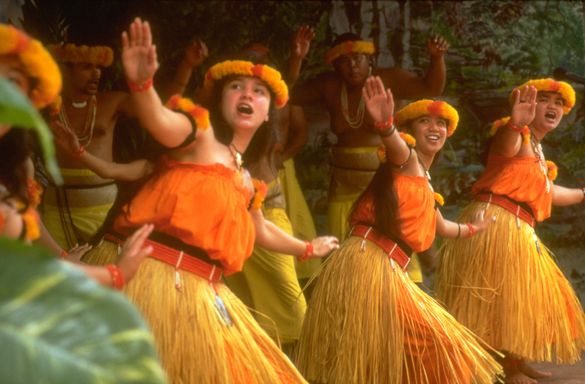
Chamorros today live in 19 villages throughout the island, where they practice many traditional customs while living a contemporary lifestyle. They are very hospitable to tourists, often inviting them into their villages to share their culture and history.
ABOUT GUAM Situated in the Western Pacific, approximately 1,550 miles south of Japan and 3,800 miles west of Hawaii, Guam offers beautiful and uncrowded beaches, world-class diving and snorkeling, and a variety of cultural and historical sites, activities and events. Its geographic location makes Guam the gateway to Micronesia and, with excellent air service to cities throughout Asia, a convenient stop-over point for trans-Pacific travelers. Guam has more than a dozen luxury resorts and an equally diverse selection of moderately priced hotels.
More information about Guam, its hotels and attractions can be obtained by contacting the North American Office of the Guam Visitors Bureau, 1301 Marina Village Parkway, Suite 210, Alameda, Calif. 94501, (800) 873-4826/(800-US-3-GUAM), or e-mail guam@avisoinc.com. Or, visit the Guam Web site at www.visitguam.org.
# # #
For media information, contact: Dianne Newton-Shaw Guam Visitors Bureau (800) 873-4826 (9 a.m. � 5 p.m. PT) di@avisoinc.com