 10 May 2013

If you're looking for a wildlife holiday, where better than one of the wildest places in the world to see caribou, moose, bears, sheep, birds and hundreds of other northern species? The Yukon is one of North America's major wilderness attractions; close to 80 percent remains pristine wilderness with just over 10 per cent of the territory fully protected. The Yukon has three national parks, six territorial parks and four Canadian Heritage Rivers. Roughly the size of France at 186,661 square miles, The Yukon is home to more than 165,000 caribou, 70,000 moose, 22,000 mountain sheep, 7,000 grizzly bears, 10,000 black bears and 250 species of birds... and only 34,000 humans! In the Yukon, people are outnumbered by moose 2 to 1!
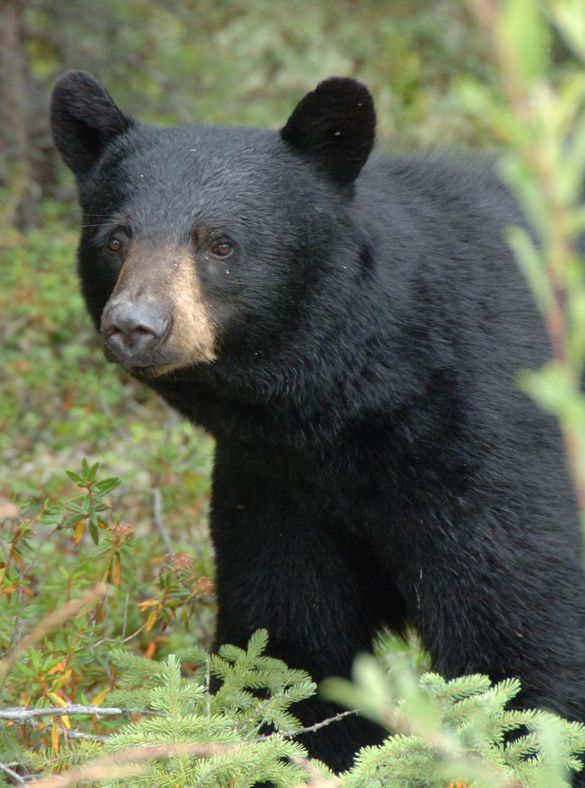
Bears: All three North American bears: Black, Grizzly and Polar can be found in the Yukon, but you are much more likely to see a Black Bear than a Grizzly Bear. Black Bears live in forested areas, whereas Grizzly Bears range from southern forested areas and across the tundra to the Arctic Ocean. Polar Bears are only seen on the North Slope and Herschel Island.
The Yukon grizzly bear population is one of Canada's largest and most stable in North America (30% of Canada's grizzlies can be found in the Yukon) and the Alsek River corridor in Kluane National Park UNESCO World Heritage Site has been designated a special preservation area. Many visitors to the Yukon spot bears on the side of the road, while hiking and paddling, or even from the air. Shorter summers in the North mean that grizzlies must be as efficient as possible in preparing for their long winter hibernation. In the Yukon, grizzlies depend on thick crops of berries and seasonal runs of salmon to fatten up. In an autumn feeding frenzy, a grizzly can eat 200,000 berries in a single day!
The southwest Yukon is also home to the extremely rare and particularly beautiful colour phase of the black bear: the blue-grey or glacier bears. The undercoat of the glacier bear is a rich blue-black, while the outer guard hairs are long and white (or light yellow) with silver tips. This color variation probably evolved during the last ice age when populations were isolated along the unfrozen sections of the coastline, due to the biological process of genetic drift (random fluctuations in the genetic composition of a small population). The blue-grey colour is ideal camouflage against the backdrop of frozen ice - the bears are nearly impossible to spot unless they are moving. This colour phase is on the decline - immigration of non-glacier black bears and emigration of glacier bears across the now unfrozen landscape, are causing the gene frequency to be eliminated in the face of more dominant colour phases, as the two mingle and mate.
Whether you're an ardent birder or a casual wildlife watcher, the Yukon's flyway comes alive as trumpeter swans, geese, sandhill cranes and other migratory birds travel to and from nesting grounds. Birders converge in the Yukon to search for species including harlequin duck, northern hawk owl, wandering tattler, gyrfalcon and three kinds of ptarmigan. The Yukon has some amazing migrations of wildlife and birds:
Trumpeter Swan Migration: Largest Trumpeter Swan Migration (March - May) in North America at approximately 3,000 birds, which is a miracle considering at one time less than 100 existed.
Sandhill Cranes: approximate 250,000 sandhill cranes return to the Yukon each summer en route to their breeding grounds in the Arctic.
Dempster Highway bird viewing: More than 160 species are found along the 750km Dempster Highway corridor which is the only public road in North America to cross the Arctic Circle. More than 100 nest along the highway and the Southern Ogilvies and Blackstone uplands are prime birding areas. The Ogilvie Mountains provide a home for several birds of prey, including species of eagles, falcons and owls. Ptarmigan are also seen here. Loons and many types of shorebirds inhabit the Peel plateau and the Mackenzie Delta.
Porcupine Caribou Herd: Yukon is home to approximately 130,000 - 150,000 caribou in one of North America's last remaining large animal herds. The herd was nominated as one of the 7 wonders of Canada a few years ago.
Visitors are able to download a comprehensive guide on wildlife viewing at:
http://www.env.gov.yk.ca/animals-habitat/wildlifeviewing.php
Tourism Yukon also have additional information on wildlife viewing at:
http://travelyukon.com/index.php?q=things-do/outdoor-activities/wildlife-viewing
-Ends-
For further information please contact:
Lisa Chamberlain
Tel: 020 8339 6152
Email: lisa.chamberlain@btinternet.com