02 Mar 2026

Saxony 2026: a year of culture, creativity and new horizons
Saxony is one of the world's most welcoming regions and retains its top position among Germany's federal states, reaffirming its status as the country's most hospitable destination – according to Booking.com's Traveller Review Awards 2026, based on 370 million verified guest reviews submitted by travellers worldwide. This year, Saxony invites visitors to experience a year rich in anniversaries, grand reopenings and fresh perspectives. From world-class art and music to spectacular landscapes, the region – with its three urban hubs of Dresden, Leipzig and Chemnitz – once again demonstrates why it is one of Germany's most compelling destinations.
Baroque splendour in Dresden
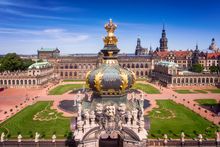
After extensive restoration, the magnificent Dresdner Zwinger is once more fully accessible. This iconic Baroque ensemble, with its pavilions adorned by sculptures by Balthasar Permoser, frames one of Europe's most beautiful ceremonial courtyards. Within its walls, the museums of Staatliche Kunstsammlungen Dresden (Dresden State Art Collections) present treasures including the world-renowned Porcelain Collection. The adjoining Semperbau houses the Old Masters Picture Gallery, while the immersive “ZwingerXperience” brings to life the opulent court festivities for which the complex was conceived.
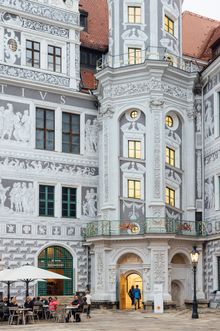
The reopening coincides with the completion of key state rooms in the nearby Royal Palace. The Great Ballroom and “Propositionssaal” council chamber now shine again, forming the backdrop for the new permanent exhibition “Masks and Crowns” (from 22 April 2026), dedicated to the ceremonial culture of the Saxon court. The restored palace chapel, a landmark of Reformation history and once a musical centre of the Lutheran world, completes this remarkable chapter in Dresden's architectural renaissance.
Under steam: Dresden celebrating on the river
In 2026, the Saxon Paddle Steamer Company celebrates 190 years as the world's oldest and largest paddle steamer fleet. Its flagship “Dresden” turns 100, joined by even older vessels such as the “Pillnitz” (140 years) and “Kurort Rathen” (130 years). Two grand steamer parades – on 1 May and 3 October – and a festive weekend in July will transform the River Elbe into a stage for celebrating a unique industrial heritage.
When giants of art across the centuries meet in Dresden
This year, the artistic genius of Gerhard Richter, Paula Modersohn-Becker, Edvard Munch and Antonio da Correggio all come together under the umbrella of the Dresden State Art Collections museum complex: The Gerhard Richter Archiv marks its 20th anniversary with a special presentation at the Albertinum museum honouring Dresden-born Gerhard Richter, titled “20 Years Gerhard Richter Archive. Works, Materials, Curiosities” (until 12 April 2026). At the same time, the Old Masters Picture Gallery stages the first comprehensive retrospective outside Italy of Antonio da Correggio, whose luminous altarpieces influenced generations of Baroque artists. “Correggio. Movingly Human” will be on from 22 August 2026 to 3 January 2027.
Also at the Albertinum, a major collaboration with the Munch Museum Oslo brings together works by Paula Modersohn-Becker and Edvard Munch in the landmark “Paula Modersohn-Becker and Edvard Munch. The Big Questions of Life” exhibition (until 31 May 2026), marking the 150th anniversary of Modersohn-Becker's birth in Dresden.
Following in the footsteps of the pioneer of Romantic opera in Dresden
Saxony's capital commemorates the 200th anniversary of the death of Carl Maria von Weber, regarded as the father of German Romantic opera. As Hofkapellmeister (court music director) in Dresden, he was vital in making the city a European operatic capital. Weber composed some of his best-known works there, and after his death in London in 1826, Richard Wagner arranged for his remains to be brought back to the city in 1844, where he was laid to rest. This year's celebrations also highlight his close artistic bond with Wagner whose work was strongly influenced by Weber.
Exploring Saxon Switzerland on old and new hiking trails
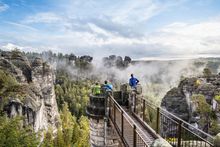
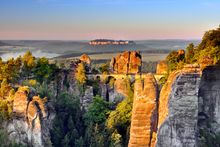
The celebrated Painters' Way hiking trail in Saxon Switzerland National Park on Dresden's doorsteps marks its 20th anniversary in 2026. While the eight stages of the 70-mile trail were officially opened in 2006, its origins go back more than 200 years when artists discovered the dramatic sandstone formations and Elbe vistas and immortalised them in their paintings, most famously the great Romantic painter Caspar David Friedrich.
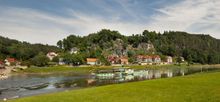
From April, a new cross-border “Friendship Trail” will link Germany with its neighbour Czechia. The 25-mile figure-of-eight route runs through a tranquil part of the Elbe Sandstone Mountains, largely within the Saxon Switzerland National Park and its Czech counterpart, Bohemian Switzerland National Park, celebrating Europe's oldest border as a place of connection and shared natural heritage.
Royal indulgence at Moritzburg Castle
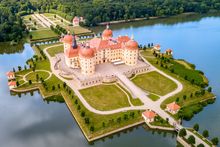
Picture-perfect Moritzburg Castle makes for another perfect day trip from Dresden. The Baroque structure sits in the middle of a lake and for the first time, one of its four towers will open to the public this May for an exhibition on the drinking culture of the Saxon court, with 300 exhibits offering a unique perspective on a very specific part of courtly life.
Leipzig: music, water and wildlife
In Leipzig, where Richard Wagner was born and Johann Sebastian Bach is buried, 2026 is shaped by musical anniversaries and vibrant festivals, including celebrations on the occasion of the 225th birthday of composer Albert Lortzing and the 50th edition of Leipzig Jazz Days (17 to 24 Oct 2026).
From kayaking to gliding along in a Venetian gondola, the opening of a new harbour close to the city centre expands boating opportunities across Leipzig's extensive network of 250 miles of waterways, while the nearby Leipzig New Lakeland offers vast lakes formed from former open-cast mines. At family-favourite Zoo Leipzig, the new “Feuerland” (Tierra del Fuego) aquatic world for seals, penguins and seabirds is set to open this year and continues the zoo's transformation into one of Europe's most innovative of its kind.
Chemnitz: global theatre in an off the beaten track cultural destination
In Chemnitz, fresh from its tenure as European Capital of Culture 2025, the international theatre festival “Theater der Welt” (18 June to 5 July 2026) with 40 productions brings artists from across the globe to a city increasingly recognised for its dynamic cultural scene.
Celebrating Jewish culture in Saxony
A statewide Year of Jewish Culture commemorates 100 years since the founding of the Saxon association of Jewish communities. Throughout 2026, exhibitions, concerts and a public Torah-writing project in Dresden highlight the richness and resilience of Jewish life in the region. The splendid Art Nouveau synagogue in Görlitz, now a cultural centre, is one of the very few in Germany to have survived the Nazi's November Pogroms in 1938.
Monumental bridges and Saxon engineering
Engineering landmarks take centre stage with the reopening of Elstertalbrücke (Elster Viaduct) in May 2026. This coincides with the 175th anniversary of both Elster Viaduct and Göltzschtalbrücke (Göltzsch Viaduct) – the world's largest brick-built bridge – celebrated as enduring symbols of Saxon innovation that continue to carry rail traffic today.
Lusatian Lake District: new horizons on the water
The Lusatian Lake District, spanning Saxony's north-east and the neighbouring region of Brandenburg, reaches a new milestone on 31 July 2026, when five lakes are connected by boat for the first time. This achievement opens up fresh possibilities for water-based exploration in a striking post-industrial landscape that is transforming former opencast mines into Europe's largest artificial lake district.
European hiking event in the Ore Mountains
In the Ore Mountains, the EURORANDO hiking festival (20 to 27 Sep 2026) brings thousands of guests to the cross-border UNESCO World Heritage Mining Region Erzgebirge/Krušnohoří. A week of guided walks, independent explorations, and encounters celebrates nature, history, and European friendship in a landscape shaped by centuries of mining. The hiking festival also features the unveiling of the Stoneman Miriquidi Hike for the very first time, giving hikers and trail runners the equivalent experience of the existing Stoneman Miriquidi mountain bike trail in the Ore Mountains.
Easier access, inclusive travel
Improved rail connections make reaching Saxony simpler than ever, including faster journeys between Berlin and Dresden taking visitors in 90 minutes from Berlin Brandenburg Airport to Saxony's capital. In addition to an international link from Kraków to Leipzig which was launched in December 2025, another new direct service connecting Copenhagen and Prague will stop in Dresden and nearby Bad Schandau from May 2026.
As part of its commitment to accessible travel, Saxony Tourism has launched a new version of its accessibility guide. The brochure featuring information on tourist attractions, accommodation and route is available for download at visitsaxony.com.
Outlook for 2027: more anniversaries on the horizon
Next year promises further highlights in Saxony: The Schloss Wackerbarth wine-growing estate just outside Dresden will be celebrating its 300th anniversary with a range of events. In Leipzig, a festival year will honour Ludwig van Beethoven on the 200th anniversary of his death, while Dresden's Old Masters Picture Gallery plans a major exhibition marking the 450th birthday of Peter Paul Rubens. The completion of the restoration of Dresden's Royal Palace is also scheduled for 2027.
ENDS
Notes to the Editor
For more event highlights and information see www.visitsasxony.com.
Media contact:
Tourismus Marketing Gesellschaft Sachsen mbH
Phone: +49 351 49170-24
info@sachsen-tour.de
For regular updates, subscribe to our newsletter: www.visitsaxony.com/newsletter