 20 Feb 2026
Tags: #VisitMS, #matogrossodosul, #brazil, #valentinesday, #romanticescapes, #romantictravel, #pantanal, #Bonito

As Valentine's Day has just passed by, global travel trends indicate that travelers are increasingly shifting from traditional urban celebrations toward immersive, nature-based experiences. Rather than city-centered itineraries, many of them are prioritizing destinations that offer meaningful connection, outdoor exploration, and opportunities to disconnect from routine.
According to the Experiential Travel Trends 2026 report by Accor and Globetrender, travelers are placing growing value on emotionally engaging and immersive experiences, with an emphasis on social wellness, nature, and authentic interaction over conventional sightseeing. The report identifies a structural shift in travel behavior toward trips that foster deeper personal connection and shared discovery.
American Express Travel's global trend reporting similarly notes that a majority of travelers are planning trips centered on memory-making and purpose-driven experiences rather than purely transactional tourism. Couples are increasingly prioritizing destinations that combine relaxation, adventure, and environmental immersion.
Within this broader industry context, Brazil's Mato Grosso do Sul has recorded measurable tourism growth alongside its sustainability-driven positioning. Official state data show a 5.6% increase in passenger arrivals at the state's main airports between January and October 2025, totaling 724,662 arrivals, compared to 685,700 during the same period in 2024. In Bonito and the Serra da Bodoquena region, key ecotourism hubs, 727,819 visitor vouchers were issued, while Bonito alone recorded 247,049 tourists, representing a 3% increase year over year.
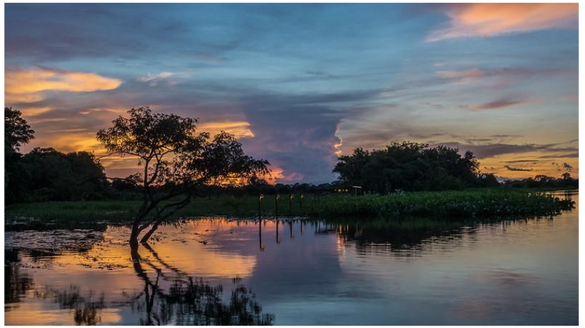
Home to a significant portion of the Pantanal, widely recognized as the world's largest tropical wetland, Mato Grosso do Sul offers structured wildlife observation, including regulated jaguar and birdwatching experiences. In Bonito, tourism operates under a controlled voucher system that limits daily visitor numbers and manages access to natural attractions, a governance model frequently cited in Brazil as a best-practice approach to ecotourism management.
These mechanisms align with growing global demand for responsible and low-impact travel. Industry analysts describe experiential travel as one in which outdoor activities, wellness-oriented itineraries, and environmental storytelling are central to trip planning. Increasingly, couples are seeking destinations where shared activities, such as snorkeling in protected freshwater springs or observing wildlife in preserved ecosystems, provide opportunities for meaningful connection beyond traditional celebratory formats.
As Valentine's Day travel continues to evolve, Mato Grosso do Sul represents a case study in how biodiversity-rich regions can align conservation policy, visitor management, and international promotion with changing traveler behavior.
🔸Learn more: https://brasildna.com/
🔸· Instagram: @brasil.dna
🔸· Facebook: facebook.com/brasil.dna
For additional information, contact:
🔹 Gisele Abrahao - gisele@globalvisionaccess.com
🔹 Anna Cecilia Santos - anna.cecilia@globalvisionaccess.com