09 Jan 2026
Tags: Sustainable Travel, Regeneration, National Forest

Experience a full year of colour and wildlife across the National Forest, from winter snowdrops to autumn fungi.
Covering 200 square miles across Leicestershire, Derbyshire and Staffordshire, the National Forest is one of the most ambitious landscape transformation projects in the country.
Over the past 30 years, land once scarred by closed mines, clay pits and fragmented farmland has been reshaped into a connected network of woodlands, meadows, wetlands, hedgerows and lakes, creating a landscape defined by colour, seasonal change and growing ecological richness.
Since its creation, nearly 10 million trees have been planted, increasing forest cover from just six per cent in the 1990s to more than 25 per cent today, with further expansion planned. More than 8,000 hectares of habitat have been transformed, supporting wildlife while providing space for outdoor recreation and local communities.
Despite having no formal landscape designation, the Forest attracts more than 8.7 million visitors in a typical year.
They are drawn to the accessible countryside, extensive network of walking and cycling routes, family-friendly attractions, and proximity to major towns and cities.
Its appeal lies not only in scale, but in the way the landscape evolves with every season, offering fresh sights and experiences on each visit.
“The colours of the National Forest are constantly shifting with the seasons,” said Richard Drakeley, tourism development manager.
“From the first spring flowers and summer wildflower meadows to the rich tones of autumn fruits and fungi, there is always something new to notice.
“It reflects how this landscape continues to grow and evolve, and how much there is to enjoy at any time of year.”
Spring brings some of the most striking contrasts of colour across the Forest, as bare winter landscapes give way to fresh greens and blossom.
At Feanedock Wood near Moira, hedgerows and woodland edges are brightened by white blackthorn blossom, followed by the soft whites and pale pinks of hawthorn. Young leaves emerge in vivid lime green, creating a fresh backdrop for early flowers.
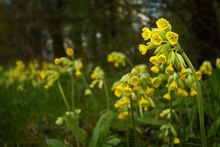
Woodland floors across the Forest begin to fill with colour as primroses add pale yellow highlights, followed by clusters of wild garlic with white flowers and rich green leaves.
Bluebells appear later in the season, forming broad blue sweeps beneath trees, with The Outwoods in Leicestershire a particularly good place to enjoy this vivid display.
Meadows also begin to colour up, with cowslips and buttercups adding yellow tones to grassland, marking the transition from early spring into late spring.
As spring fades, and we move into early summer, colour spreads into open landscapes and farmland.
Minorca Woodlands between Swepstone and Measham is known for its species-rich grasslands, where wildflower meadows come into their own.
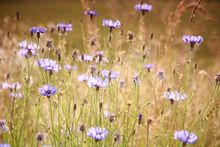
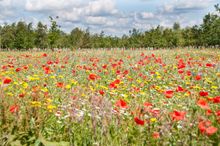
Cream and white oxeye daisies, purple knapweed and white clover, and bright yellow buttercups create a varied and textured palette that changes week by week.
Along field margins and tracks, blue chicory stands out sharply against green grass, while purple wild marjoram lines sunny rides and woodland edges. Hedgerows deepen in colour as leaves darken, and early fruits begin to form.
Across the wider landscape, arable fields gradually turn from green to gold as wheat and barley ripen, often punctuated by vivid red poppies that add flashes of colour to the summer scene.
Autumn brings the richest and most complex colours of the year.
At Hicks Lodge the canopy shifts through gold, copper and warm brown as leaves change and fall. Woodland rides and grassland edges are filled with seed heads and dried grasses, adding softer beige and straw tones to the landscape.
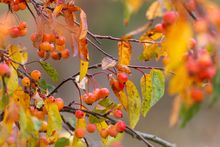
Hedgerows glow with fruit, including red rowan berries and hawthorn haws, while apples, plums and crab apples reach peak colour in orchards.
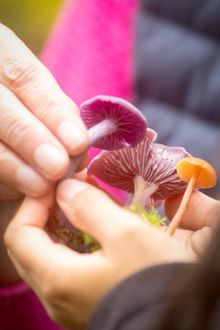
Woodland floors become a focal point for autumn colour as fungi emerge in abundance, and Jackson's Bank in Staffordshire is the perfect spot to look for brightly coloured russulas in reds, pinks, yellows and greens.
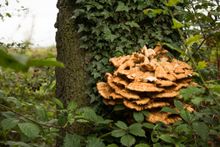
Look out also for scarlet waxcaps and jewel-like parrot waxcaps in grassland, the unmistakable red and white fly agaric beneath trees, and sulphur-yellow chicken of the woods growing on deadwood. Together, these form a dense and layered autumn display.
Winter strips the landscape back, but colour remains an important feature.
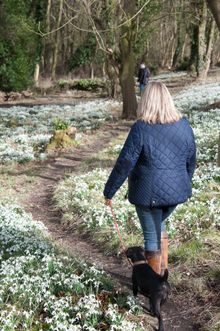
The snowdrops at Dimminsdale Nature Reserve, part of the Calke Abbey estate, carpet the woodland with a stunning display of white and green.
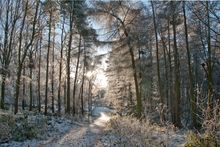
At Albert Village Lake, frost and mist soften woodlands and fields into silvers and greys, while still water reflects winter skies and bare trees.
Evergreens, ivy and conifers at Jackson's Bank, part of the ancient Forest of Needwood, provide deep green structure through the colder months, and holly adds bright red accents along woodland edges and hedgerows.
On fallen wood and damp ground, fungi continue to provide colour and texture.
Bracket fungi and jelly fungi appear in deep browns, oranges and amber tones, standing out against pale leaf litter and moss.
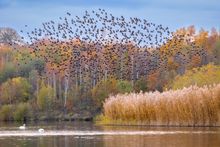
Reedbeds and waterside vegetation fade to straw colours, adding contrast to the darker open water.
From spring blossom and summer meadows to autumn fruits and fungi and the light and texture of winter, the National Forest transforms through the year, offering something new to discover with every return visit.
LINKS
https://www.nationalforest.org/whats-new/story/feanedock-woodlands-a-story-of-transformation
https://www.nationalforest.org/explore/woodlands/the-outwoods
https://www.nationalforest.org/explore/woodlands/minorca-woodlands
https://www.nationalforest.org/explore/woodlands/albert-village-lake
https://www.nationalforest.org/explore/walking/needwood-circular-walk
https://www.nationalforest.org/explore/woodlands/dimminsdale-nature-reserve
https://www.nationalforest.org/explore/attractions/hicks-lodge-the-national-forest-cycling-centre
Notes to editor
The National Forest covers 200 square miles across Derbyshire, Leicestershire and Staffordshire. In 2025, the National Forest Company marked its 30th anniversary, having been established in the early 1990s with a bold vision to bring the benefits of trees, woodland and multi-use forestry to lowland England, where thousands of people live and work.
With no formal landscape designation, the National Forest is one of the UK's earliest and most ambitious landscape-scale regeneration initiatives. It provides clear evidence of how trees and woodland can drive long-term environmental, social and economic renewal, and how nature-based investment can transform places and communities in the face of a changing climate.
This is a landscape where people live and work alongside nature, and a model that is already inspiring new forests elsewhere in the UK. It is reimagining how forests look and function in a modern Britain and provides a strong example of how national tree planting and nature recovery commitments are delivered on the ground.
Since 1991, almost 10 million trees have been planted and more than 8,000 hectares of land transformed. Forest cover has increased from around six per cent in the early 1990s to approaching 26 per cent, with a long-term ambition to reach 33 per cent. The National Forest Company has worked closely with farmers and landowners throughout this period, with farmers and private landowners accounting for most of the forest creation grant applicants.
The Forest has delivered significant gains for biodiversity, including increases in species richness and abundance. Notable milestones include the return of the purple emperor butterfly for the first time in nearly 200 years and the reintroduction of dormice, a UK priority species that had been extinct in Derbyshire for more than a century.
The National Forest is also an important driver of economic and social regeneration. The visitor economy has grown by around 30 per cent in recent years, with more than 8.7 million visitors annually and around 5,000 tourism-related jobs supported. Education and community engagement are central to its success, with more than 85 per cent of schools undertaking regular outdoor learning and over 70 volunteer groups actively managing woodlands across the Forest.