12 Dec 2025

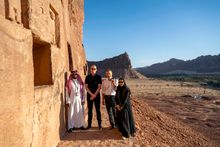
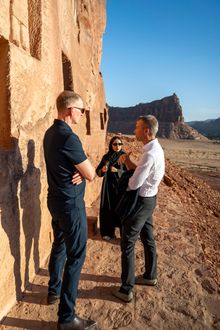
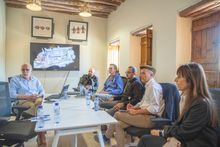
The Royal Commission for AlUla and the Archaeological Park of Pompeii continue to advance their joint work on the preservation of AlUla Old Town, under the cooperation agreement signed in January 2025. The partnership aims to deepen research and protection efforts at this historic site and guide its development through a comprehensive heritage-led approach. The collaboration brings together two of the world's leading open-air heritage destinations, linking active archaeological work with visitor-facing cultural development.
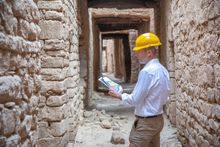
A specialised team of archaeologists, conservators, architects and engineers are leading the project, applying rigorous scientific methodologies to study the town's urban character and emphasise its historical significance. These efforts lay the groundwork for long-term preservation programmes that safeguard its architectural and artistic features.
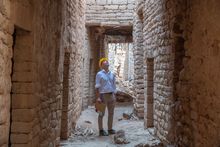
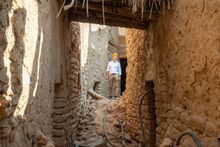
AlUla Old Town is one of the most significant elements of AlUla's cultural history, with surviving structures estimated to be around three centuries old. More than one thousand residential units still retain the essence of traditional life, forming a living record of oasis culture and reflecting AlUla's enduring cultural continuity.
The current phase includes the restoration of approximately thirty houses, in addition to interventions on selected elements and the mosque within the town's boundaries. Work is centred on strengthening documentation and interpretation standards and enhancing preservation techniques that support the site's long-term sustainability and reinforce its role as a leading cultural destination.
These efforts reflect RCU's commitment to protecting and developing heritage sites in line with international best practices. They also support the sustainable development of AlUla Old Town in alignment with AlUla's long-term vision, enhancing its cultural and historical significance locally and internationally.
Gabriel Zuchtriegel, the Archaeological Park of Pompeii's director, said
“We noted stones with inscriptions from the Iron Age site of Dedan, which is nearby, dating from the first millennium BCE, but also tin cans containing pure ghee, with labels in English and Arabic, imported from the Netherlands sometime toward the mid 20th century,” Dr. Zuchtriegel also said. “The characteristic wall paintings, which were usually created when a newly married couple moved into a house, at some point start showing cars next to traditional symbols such as the tree of life, and the cars can be dated to different periods based on their design.”
Silvia Barbone, Vice President of Strategic Partnerships at the Royal Commission for AlUla (RCU), said
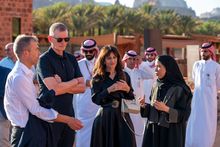
“Pompeii's second visit to AlUla this year reflects our ongoing assessment of how this collaboration can best contribute to the future of AlUla Old Town”
“The team, led by Dr. Gabriel Zuchtriegel, explored the site's remarkable layering of history—where centuries-old inscriptions exist alongside traces of modern life. These insights are helping us define the scope and direction of a partnership that could set new benchmarks in heritage conservation and adaptive reuse. Our goal is to ensure that any joint initiative with Pompeii builds on shared values of authenticity, innovation, and community relevance.”
Dr Abdulrahman Al-Suhaibani, Vice President of Culture at the Royal Commission for AlUla, said:
“AlUla Old Town is one of the Kingdom's most meaningful heritage assets. Our collaboration with Pompeii strengthens our ability to safeguard this history while enhancing the way we share it with the world. By deepening our understanding of the site and elevating how its stories are presented, we are creating a more immersive and insightful experience for visitors and ensuring that Old Town remains a living, resonant chapter of AlUla's cultural identity.”
Ends
About AlUla:
Located 1,100 km from Riyadh, in North-West Saudi Arabia, AlUla is a place of extraordinary natural and human heritage. The vast area, covering 22,561km², includes a lush oasis valley, towering sandstone mountains and ancient cultural heritage sites dating back thousands of years to when the Lihyan and Nabataean kingdoms reigned.
The most well-known and recognised site in AlUla is Hegra, Saudi Arabia's first UNESCO World Heritage Site. A 52-hectare ancient city, Hegra was the principal southern city of the Nabataean Kingdom and is comprised of 111 well-preserved tombs, many with elaborate facades cut out of the sandstone outcrops surrounding the walled urban settlement.
Current research also suggests Hegra was the most southern outpost of the Roman Empire after the Romans conquered the Nabataeans in 106 CE.
In addition to Hegra, AlUla is also home to ancient Dadan, the capital of the Kingdoms of Dadan and Lihyan, and considered to be one of the most developed 1st millennium BCE cities of the Arabian Peninsula, and Jabal Ikmah, an open-air library of hundreds of inscriptions in many different languages, which has been recently listed on the UNESCO's Memory of the World Register. Also AlUla Old Town Village, a labyrinth of around 900 mudbrick dwellings and buildings, developed from at least the 12th century, which has been selected as one of the World's Best Tourism Villages in 2022 by the UNWTO.
For more information, please visit: experiencealula.com