 10 Dec 2025
Tags: coral spawning, Great Barrier Reef, Southern Great Barrier Reef, Tropical North Queensland, #thisisqueensland

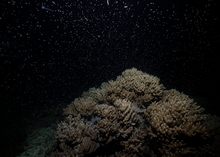
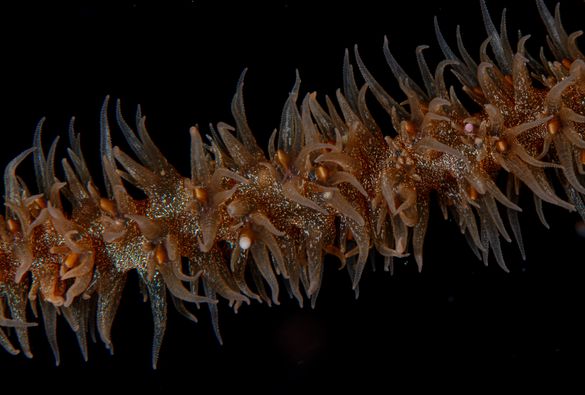
10 December 2025 - It may not snow in Queensland in December, but underwater, the Great Barrier Reef is putting on its own kind of snowfall in a dazzling underwater exhibition of new life. Giant clams, molluscs and gastropods joined the Great Barrier Reef's headline event, the annual synchronised coral spawning, across much of the 2600km length of the Reef last night (09 December 2025), putting on a jaw-dropping show after some corals performed a curtain raiser in November. This underwater snowstorm of coral sperm and eggs showcases one of the world's most visually incredible natural phenomenon.
Sunlover Reef Cruises Master Reef Guide Michelle Barry and Marine Education Leader Abbi Robinson monitored the event at Moore Reef alongside the Sunlover pontoon.
Ms Barry, a marine biologist who has worked on the Great Barrier Reef for 15 years and witnessed eight spawning events, said being underwater last night was absolute chaos in the best possible way.
“At one point I completely lost visibility — there were so many eggs and sperm in the water it felt like being caught in a pink underwater blizzard,” she said.
“It reminds me of snowstorms back home in New Hampshire, but this one was alive and buzzing with new life.
“As trillions of tiny coral larvae form and drift, every creature on the Reef gets involved. Worms, sea cucumbers, crustaceans and countless other invertebrates flock in to feed on the nutrient-rich spawn, creating a frenzy of underwater activity.
“It's incredible to witness. A real reminder that the Great Barrier Reef is very much alive.”
Sunlover's female-led marine biology team conducts weekly biodiversity surveys and long-term monitoring across sites surrounding Moore Reef as part of the Federal Government's Tourism Reef Protection Initiative. Following the December spawning spectacular, the team will complete annual pre-summer surveys to establish baseline data ahead of the summer season.
Marine biologist Abbi Robinson says this data is invaluable to understand the health of the Reef.
“The mass spawn shows the corals are healthy and resilient — reproduction at this scale is a strong sign they're still adapting,” she said.
“But climate change remains the biggest threat to coral reefs worldwide. Monitoring gives us a clear picture of how our section of the Reef is coping and lets us respond quickly if there's a heatwave or disturbance.”
Further south on the Reef, Lady Elliot Island's Environmental Manager and Master Reef Guide Jessica Blackmore said the Southern Great Barrier Reef was in great shape heading into the summer reproductive season.
While some northern and central reefs fired up in November, Lady Elliot Island saved its main act for December, with Ms Blackmore adding that this year's “split spawn” reflected natural rhythms of moonlight and temperature.
The island's long-running conservation efforts have also played a big role in setting up a strong season, helping set the stage for a next-level spawn.
“Our sustainability initiatives and education programs reduce our environmental footprint and inspire others to make positive change, and our revegetation program is restoring the island's habitat. Together, these actions contribute to strong, resilient coral communities,” Ms Blackmore said.
And while scientists watched closely, it's the emotional impact that sticks with visitors lucky enough to witness the coral's once-a-year release of life. For Ms Blackmore, it never gets old.
“Being in the water during a mass spawning event is truly awe-inspiring. It's uniquely beautiful, there's really no other natural event like it.”
Why Two Spawning Events?
The mass coral spawning is triggered by the November full moon, but different coral species follow slightly different biological clocks.
- Some spawn earlier in the season (often in November).
- Others wait for the optimal water temperatures and day-length cues that fall in December.
- Many soft corals are simultaneous hermaphrodites, releasing both eggs and sperm that mix in the water column before developing into swimming planula larvae.
- Others reproduce asexually or stagger their spawn for better survival odds.
This creates two distinct, yet connected, spawning windows — a warm-up in November followed by a larger, synchronised event in December.
What is coral spawning
Triggered by water temperature and the lunar cycle, coral spawning is a mass synchronised event where entire colonies of corals release their eggs and sperm bundles simultaneously. It typically occurs one to six nights after the October, November and December full moons with different parts of the 2600km-long Great Barrier Reef spawning in different months. The northern and shallow inshore reefs tend to spawn earlier.
Once the sperm fertilise the eggs, they develop into tiny larvae called planulae and settle on the reef substrate, growing into new coral colonies to help repopulate the reef. It usually happens at night with many other marine creatures spawn alongside the corals to help protect against predators.
ENDS
For media inquiries, please contact: consumerpr@queensland.com
This Press Release is supplied courtesy of Tourism and Events Queensland. For more information, please go to www.queensland.com and for images, please access the Dropbox here or visit www.visuals.queensland.com.