09 Sep 2021

There's lots to look forward to when travel restrictions to Costa Rica begin to ease. Not only will fully-vaccinated and visitors under the age of eighteen, be allowed to enter without the need to purchase travel insurance (as long as they show proof and complete a digital epidemiological form also known as a HEALTH Pass), but there's plenty of awe-inspiring activities for travellers to enjoy the paradisiacal Central American country.
The latest news sees the 'digital nomad law' approved; Costa Rica commemorates 200 years of independence, renowned Costa Rican chef - Randy Siles, creates a cooking course for disadvantaged young people; and Costa Rica's beloved animal, the famed sloth, has officially become a national symbol.
LATEST NEWS
Costa Rica commemorates 200 years of independence on 14th and 15th September
This year Costa Rica has been commemorating 200 years of Independent life with a solemn events programme based on four main pillars: historical Costa Rica; peaceful and supportive Costa Rica; environmentally responsible and decarbonised Costa Rica; and capable, creative and plural Costa Rica. September is a fun-filled month of celebrations, with the two main dates set on 14 and 15 September. Costa Rica has been embracing the spirit of 200 years of independence, with an array of virtual and face-to-dace celebrations, in which the country hope to do more of this year, when the time is right. Key events which are set to take place to commemorate 200 years of independence include; a historical photography exhibition presented
by the National Museum of Costa Rica, a series of concerts prepared by The National Symphony Orchestra, an 'Independence day' conversational panel coordinated by Goicoechea Public Library, along with the famous lantern parade and annual decoration of houses in the country's national colours. www.200costarica.go.cr
Costa Rican Chef, Randy Siles creates 7-month cooking course for disadvantaged children
Randy Siles, current chef at Marriott's Punta Islita resort will train five young people from Zurquí Youth Training Centre. The seven-month course, combined with theoretical, virtual and in-person training has been recognised by The Ministry of Justice and Peace to provide the facilities needed to enable the participants to prepare for the world of hotel gastronomy and to learn and connect with Costa Rica's indigenous flavours and products. Stemming from Siles dream of giving back to society through his work and experience, in which Siles previously supported the vulnerable within Santa Teresa's community, the initiative is part of the National Plan for Sustainable and Healthy Gastronomy of Costa Rica where Siles' sits as a leading ambassador. Its key mission is to empower a new generation of cooks in Costa Rica to transform community food systems through sustainable and healthy gastronomy and advance food sovereignty.
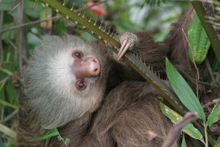
Sloths become Costa Rica's national symbol
Costa Rica has approved the first bill to declare its much loved furry animals, the two-toed sloth (Choloepus hoffmanni) and the three-toed sloth (Bradypus variegatus), as national symbols, adding up to number 16 of symbols that exist. The proposal agreed highlights the significant importance of sloths in Costa Rican wildlife. The Ministry of Environment and Energy (Minae) will ensure the conservation of sloths and their protection, while the Ministry of Public Works and Transportation (MOPT) will promote regulations for speed limits on sites to enable free movement. The initiative will expose sloths as an official symbol of natural attractions within Costa Rican tourism, truly showcasing how much they are adored by “ticos” (Costa Ricans) and visitors alike.
New bill to attract international digital nomads to Costa Rica approved
Costa Rica has approved the first bill of its new law to attract digital nomads and remote workers to the country. The bill, called “Law to Attract International Workers and Remote Service Providers”, aims to help reactivate the economy from the global pandemic. Remote workers and digital nomads will now be able to stay in Costa Rica for up to one year - extendable for a second one – and be exempt from paying income taxes and import taxes on the equipment they need. They will also be able to easily open a Costa Rican bank account and validate their country's driving licence. As long as 'digital nomads' meet the requirements; a stable income of £2,600 or more and obtain a sufficient medical services policy throughout their stay, it is now possible to work in paradise.
Corcovado sits within top ten best national parks in the world
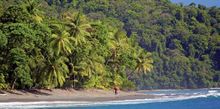
Corcovado National Park has recently been recognised as one of the top ten National Parks in the world to visit by Time Out - thanks to its jaw-dropping scenery and diverse wildlife offerings - from jaguars, big cats, sloths, baird's tapir, monkey's and many more. Located in Costa Rica's south pacific region in the Osa Peninsula, Corcovado National Park is one of the most unique and biodiverse places on the planet, containing 2.5% of the world's biodiversity in just 164 square miles, Corcovado truly is the 'crown jewel' of the country's national park system. http://www.sinac.go.cr/ES/ac/acosa/pnc/Paginas/default.aspx
New initiative for solo female travellers
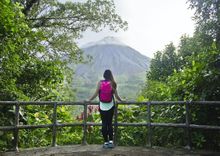
The 'SOFIA Network' is new collaborative initiative between Costa Rica Tourism Institute, National Women's Institute and the National Commission for Tourism Security, aimed at fostering gender equality and safer travel environments for female and solo travellers. With a programme generated to guide the country's tourism community of the importance of 'destination safety', the 'SOFIA Network' is another leading drive to boost Costa Rica's economy and prove not only is Costa Rica a bucket-list hotspot for female travellers but a peaceful and sustainable environment to enjoy travelling alone in. https://www.ict.go.cr/es/sostenibilidad/programa-red-sofia.html
The Institute of Coffee, ICafe certifies as Carbon Neutral
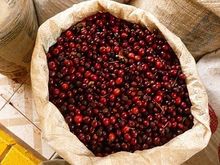
iCafe has recently been certified as 'carbon neutral', a huge milestone for the Costa Rican coffee agro-chain. With a mission to regulate, encourage and defend all of Costa Rica's coffee activity, the institute has accomplished not only exceptional quality of coffee but have committed to maintaining a sustainable, positive approach that aligns with the countries eco-conscious pledge. With a law that was passed in 1989 prohibiting the planting of low-quality beans, Costa Rica is renowned for its highest quality of hand-picked 100% Arabica coffee beans, standing as a leading figure within the coffee market. http://www.icafe.cr/
The Green Climate Fund supports the electric train
Costa Rica will receive £181 million from UN Green Climate Fund to aid the governments' flagship project – a five-line electric train, connecting from east to west of the Greater Metropolitan Area (GAM). Costa Rica, which boasts 6.5% of the world's biodiversity and known for its pioneering efforts in tackling climate change and 'green growth' – the electric train project is another outstanding achievement and step towards the country's national plan of decarbonisation by 2050.
Vaccinated visitors and under 18's exempt of travel insurance
As of 1st August 2021, fully vaccinated visitor's as-well as under eighteens, who plan to visit Costa Rica when the time is right, can enter the country without needing to purchase travel insurance. In hope to boost Costa Rica's economy, the country declared as long as they complete a digital epidemiological form also known as a HEALTH PASS along with proof of a vaccination card/certificate, visitors are exempt. Any other visitors, must purchase travel insurance that covers accommodation in case of quarantine and medical expenses due to Covid-19 illness – this insurance can be also acquired at the airport in Costa Rica.
https://www.visitcostarica.com/en/costa-rica/planning-your-trip/entry-requirements
Costa Rica co-chairs High Ambition Coalition (HAC), Nature and People initiative
As part of the intergovernmental group of 60 countries, Costa Rica, France and UK have launched 'HAC', a pioneering initiative to globalize a goal of protecting 30% of the world's land and ocean by 2030, with the aim at stopping biodiversity loss and ensuring that natural production of clean air and water, the vital source of economic security. Costa Rica continuously proves to be the epicentre of protecting the planet and this pledge is another action, signifying the country's championing efforts.
https://www.hacfornatureandpeople.org/
For more information about Costa Rica, please visit: www.visitcostarica.com/uk