 11 May 2004

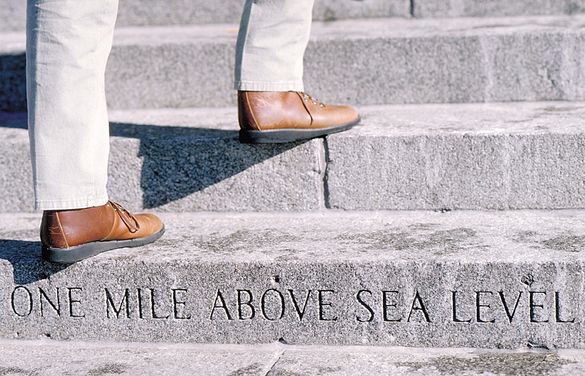
1. Denver really is exactly one mile high. By an amazing stroke of good luck, there is a step on the State Capitol Building that is exactly 5,280 feet above sea level. Which step? Well, the 11th step is carved in stone as a mile high, but in 1969, it was found that the actual spot was 4 steps higher. In 2002, it was discovered that Denver is 3 feet higher than previously thought. So take your pick of steps � but one of them is assuredly one mile high. In Denver�s rarified air, golf balls go ten percent farther. So do cocktails. Alcoholic drinks pack more of a wallop than at sea level. The sun feels warmer, because you�re closer to it, but your coffee is cooler, because water boils at 202 degrees. Mile High Denver is also extremely dry, so it is good idea to drink more water than normal. With less water vapor in the air at this altitude, the sky really is bluer in Colorado. But there�s 25 percent less protection from the sun, so sunscreen is a must.
2. Denver has the 10th largest downtown in America. Unlike some Western cities, Denver has a definitive, exciting and walkable downtown � the 10th largest in the nation. Within a mile radius, downtown Denver has three major sports stadiums, the nation�s second largest performing arts center, three colleges with 30,000 students, an assortment of art and history museums, a mint producing 10 billion coins a year, a river offering white water rafting, over 5,300 hotel rooms, a $140 million amusement park, a $100 million aquarium with sharks and sea otters and well over 300 restaurants.
3. Denver is near the mountains, not in them. Denver is located on high rolling plains, 12 miles east of what locals call the �foothills,� a series of gentle mountains that climb to 11,000 feet. Just beyond is the �Front Range,� a series of formidable snowcapped peaks that rise to 14,000 feet. Denver might not be in the mountains, but the mountains dominate Denver. There are 200 named peaks visible from Denver, including 32 that soar to 13,000 feet and above. The mountain panorama visible from Denver is 140 miles long. State law prohibits building any structure that would block the view from the State Capitol. To penetrate the mountains west of Denver, required building the highest auto tunnel in the world (Eisenhower Tunnel) and the sixth longest railroad tunnel in North America (the Moffat Tunnel).
4. Denver has 300 days of sunshine a year. Located east of a major mountain range, Denver has a mild, dry and sunny climate with more annual hours of sun than San Diego or Miami Beach. In winter, Denver is dryer than Phoenix with an average daily high of 45 degrees in February. Golf courses remain open all year and have been played as many as 30 days in January. Denver receives only 14 inches of precipitation a year � about the same as Los Angeles.
5. Denver�s history is short, but colorful. In 1858, there was not a single person living in the Denver metro area except for some migrating camps of Arapaho and Cheyenne. Just 30 years later, Colorado was a state with a population of almost 200,000. It was a Gold Rush that caused this boom, and in a 30 to 40 year period Denver saw some of the wildest events in the Wild, Wild West. This fascinating period lives again in museums, old gold mining villages and hundreds of wonderful, elegant Victorian buildings that can be found throughout the city, many of them now housing restaurants, shops and hotels. The 26 square block Lower Downtown Historic District (LoDo) is the largest concentration of Victorian and turn-of-the-century buildings in the nation. Today, LoDo is home to 90 brew pubs, jazz cafes, restaurants, sports bars and dance clubs. 6. Denver has the largest city park system in the nation. Denver has more than 200 parks within the city and 20,000 acres of parks in the nearby mountains, including spectacular Red Rocks Amphitheatre. The city has its own buffalo herd, located in the mountains with a panoramic view. Other mountain parks include Echo Lake, at the base of the Mount Evans highway � the highest road in North America, and Buffalo Bill�s Grave on top of Lookout Mountain. Denver plants more than 200,000 flowers in 26 formal flower gardens every spring. There are 650 miles of off-street bike paths, 90 golf courses and one of the nation�s largest urban trail systems. Due to all these recreational opportunities, a Federal study recently found that Denver has the thinnest residents of any major U.S. city. Denver pets fare well too. Denver was selected as the #1 city for dogs and cats in May 2003 by the Purina Pet Institute. They rated Denver as the healthiest city for pets in the country because the Denver metro area has the most veterinarians per capita and the fewest fleas.
7. Denver is a cultural city with the highest educated population in America. In its Old West days, Denver had a performance of Macbeth before it had a school or a hospital. That performance took place in a saloon. Today, the Denver Performing Arts Complex has nine theatres seating 10,000 people and is second only to New York�s Lincoln Center. In 2002, Denver voters authorized $75 million to restore the Denver Auditorium Theatre, which will add a state-of-the-art 2,400-seat theatre to the complex. The six county metro area has a self-imposed sales tax for the arts that raises up to $36 million a year, which is distributed to 200 arts organizations and facilities. Denver has more high school and college graduates per capita than any other city. Denver is currently adding a new wing to the Denver Art Museum designed by Daniel Libeskind, winner of the World Trade Center redesign project. This will be his first building in America.
8. Denver also loves its sports. Denver is one of only a few cities to have seven professional sports teams including the NFL Denver Broncos, the NBA Denver Nuggets, NHL Colorado Avalanche; Major League Baseball�s Colorado Rockies, Major League Soccer�s Colorado Rapids, the Arena Football Denver Crush and the Lacrosse team Colorado Mammoth. The Colorado Rockies have 11 Major League Baseball attendance records, while the Denver Broncos have sold out every game for more than twenty years. Denver also has horse and dog racing, professional rodeo and an annual Grand Prix on Labor Day Weekend. Denver is also the only city to build three new stadiums in the 1990s: 50,000-seat Coors Field; 75,000-seat INVESCO Field at Mile High, and 20,000-seat Pepsi Center.
9. Denver is a city of many colors and cultures with great diversity. Denver grew by 30 percent in the 1990s � an average of 1,000 new people a week, every week for ten years. In this period, the Hispanic population in Colorado increased by 73 percent. Today, 32 percent of the City of Denver is of Hispanic and Latino descent and 11 percent are African American. Denver�s diversity is celebrated at numerous festivals and events including the nation�s largest Cinco de Mayo celebration and the annual Juneteenth and Dragon Boat Festival. The Black American West Museum tells the story of African American contributions to Colorado history. About a third of the cowboys on the great cattle drives were Blacks.
10. Denver brews more beer than any other city. The first building in Denver was a saloon, so it�s natural that Denver would become a great beer town. Coors Brewery is the world�s largest. Denver�s Great American Beer Festival is the largest in the nation with 1,700 different beers. The Wynkoop Brewing Company is the largest brewpub in America. On an average day, Denver brews more than 80 different beers. Why is Denver the �Napa Valley� of beer? Well, just as the water tumbling down from the Scottish Highlands has made Scotland a renowned center for whiskey, the great taste of Rocky Mountain spring water provides a key basic ingredient for the city�s beer brewing industry.
###
Media Contact: Jill Strunk +1 (303) 571-9451 jstrunk@dmcvb.org